

The Manosphere Explained: What Louis Theroux’s Documentary Reveals About Young Men’s Mental Health
Netflix’s new documentary Louis Theroux: Inside the Manosphere has sparked renewed public debate about the rise of online influencers promoting controversial views about masculinity, relationships and gender.
The film follows several social media personalities who have built enormous audiences by presenting themselves as guides for young men navigating dating, identity and success. While reactions to the documentary have been mixed, it raises an important question that many parents, educators and clinicians are increasingly asking:
Why are so many young men drawn to this type of content in the first place?
For psychologists, the answer is rarely simple. The rise of the manosphere reflects a complex intersection of adolescent brain development, social media algorithms, loneliness, identity formation and broader cultural shifts around masculinity.
Understanding these dynamics is crucial if we are to move beyond alarmist headlines and towards meaningful conversations about young men’s mental health.
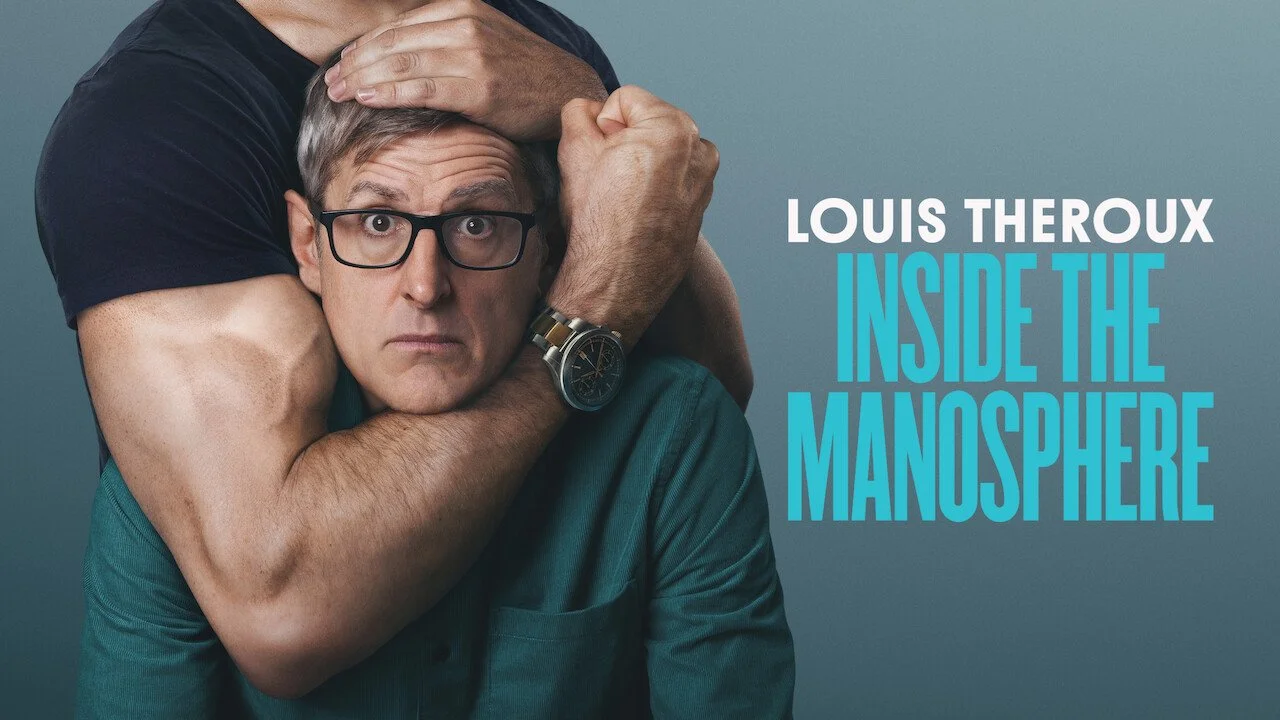
Louis Theroux Inside the Manosphere Netflix Documentary promotional still | Image Credit: Netflix
What Is the Manosphere?
The manosphere is a loosely connected network of online communities centred around discussions of masculinity, dating, relationships and male identity.
These communities exist across social media platforms, podcasts, livestreams and private messaging groups. Some focus on fitness, entrepreneurship or personal development, while others promote more adversarial views about gender roles and relationships between men and women.
In recent years, a number of influencers have built large audiences by positioning themselves as mentors to young men who feel uncertain about modern relationships or social expectations.
The term has gained wider attention following documentaries such as Louis Theroux: Inside the Manosphere, which explore how these communities operate and why their messaging resonates with some audiences.
What often goes unrecognised is that these online ecosystems do not emerge in isolation. They grow within a broader digital environment that rewards provocative ideas with visibility and engagement.
Why the Teenage Brain Is Particularly Vulnerable to Online Influence
To understand the appeal of manosphere content, it helps to consider the psychology of adolescence.
The human brain continues developing well into the mid-twenties. One of the last areas to fully mature is the prefrontal cortex, which governs decision-making, impulse control and the ability to critically evaluate information.
During adolescence and early adulthood, individuals are therefore more likely to respond strongly to social approval, emotional stimuli and perceived status.
At the same time, young people are navigating a period of intense identity formation. They are asking fundamental questions about who they are, how relationships work and what their future might look like.
Influencers who present confident and highly simplified explanations about success, attraction or masculinity can therefore appear compelling. Their messaging often offers a clear set of rules or frameworks that promise certainty in a stage of life that can otherwise feel confusing.
For some viewers, these narratives can provide a sense of structure and direction, even when the ideas themselves are deeply problematic.
The Power of Social Media Algorithms
Another critical factor in the spread of manosphere content is the architecture of modern social media platforms.
Algorithms on platforms such as TikTok, YouTube and Instagram are designed to maximise engagement. If a user watches or interacts with content about dating advice, masculinity or relationships, the platform will often recommend increasingly similar material.
Over time, this can create what psychologists sometimes describe as algorithmic echo chambers.
A young person who initially watches a relatively harmless motivational video about confidence or self-improvement may gradually be exposed to more extreme interpretations of those ideas.
Because the content appears repeatedly in their feed, it can begin to feel as though these perspectives are widely accepted or mainstream.
In reality, the algorithm may simply be amplifying a particular niche of online voices.
“One of the biggest risks is not a single video, but repetition. When the same type of message appears again and again, it starts to feel like consensus rather than content.
From a psychological perspective, familiarity can be mistaken for truth. That is how online environments can gradually shape beliefs without the individual fully realising it.” - Dr Bradley Powell
The Influence of Figures Like Andrew Tate
In recent years, figures such as Andrew Tate have become some of the most recognisable personalities associated with the broader manosphere ecosystem.
Short clips of Tate’s videos have circulated widely across platforms such as TikTok and YouTube, often reaching audiences far beyond his original followers.
Supporters frequently describe this content as motivational or focused on male success. Critics, however, argue that some of the messaging reinforces adversarial attitudes towards women and relationships.
From a psychological perspective, the appeal of these figures often lies less in the specific ideas they promote and more in the certainty and confidence with which those ideas are delivered.
During periods of identity formation, young people may be drawn to individuals who appear decisive, powerful or authoritative. These qualities can be particularly appealing to those who feel uncertain about their place in the world.
Importantly, the scale of influence for figures like Tate is not driven solely by followers. Social media algorithms and viral sharing play a significant role in amplifying their visibility.
Loneliness and the Search for Belonging
Another important factor often overlooked in discussions about the manosphere is the issue of male loneliness.
Several studies in recent years have highlighted increasing levels of social isolation among young men. Many report having fewer close friendships and less emotional support than previous generations.
Digital living, fewer community spaces and uncertainty about changing cultural expectations can all contribute to this sense of disconnection.
Online communities can therefore offer something powerful: a sense of belonging.
Influencers often frame their platforms as spaces where men can discuss rejection, ambition, competition and success openly. For individuals who feel misunderstood or overlooked elsewhere, that recognition can feel validating.
However, when belonging is built around rigid or adversarial beliefs about relationships, it can reinforce perspectives that ultimately deepen isolation rather than reduce it.

Louis Theroux Inside the Manosphere Netflix Documentary promotional still | Image Credit: Netflix
Simple Narratives in a Complex World
The appeal of manosphere content is also linked to the clarity it promises.
Modern society has introduced significant shifts in gender roles, career paths and relationship dynamics. While these changes have created important freedoms and opportunities, they have also introduced complexity.
Some online influencers respond by offering simplified explanations for these shifts. Their narratives often suggest that men must reclaim status or power through dominance, wealth or control within relationships.
Psychologically, simplified narratives can be highly attractive in periods of uncertainty. They reduce ambiguity and offer a sense of direction.
The difficulty is that these frameworks often portray relationships as competitions rather than partnerships, reinforcing adversarial thinking about gender.
Signs a Young Person May Be Becoming Influenced by Online Echo Chambers
Not every teenager who watches controversial influencers will adopt extreme beliefs. However, psychologists sometimes notice patterns when online communities begin to shape a young person’s worldview more rigidly.
These changes may include increasingly hostile language about relationships, dismissive attitudes towards differing perspectives or spending large amounts of time within online spaces that reinforce a single narrative.
Sometimes it also appears as a shift towards “all or nothing” thinking about gender roles, success or social status.
When these patterns emerge, early conversations that explore where the ideas come from—and how online platforms amplify certain voices—can be more effective than confrontation or criticism.
In some cases, young people may also benefit from having space to explore these themes with a trained clinician who can help them think critically about identity, relationships and self-worth.
“A shift towards more rigid thinking is often one of the earliest signs. When a young person moves from curiosity to certainty, particularly in ‘all or nothing’ terms, it can indicate that their worldview is becoming more influenced by a narrow set of perspectives.
At that point, curiosity, such as asking ‘what makes you think that?’, from parents or clinicians tends to be far more effective than confrontation.” - Dr Bradley Powell
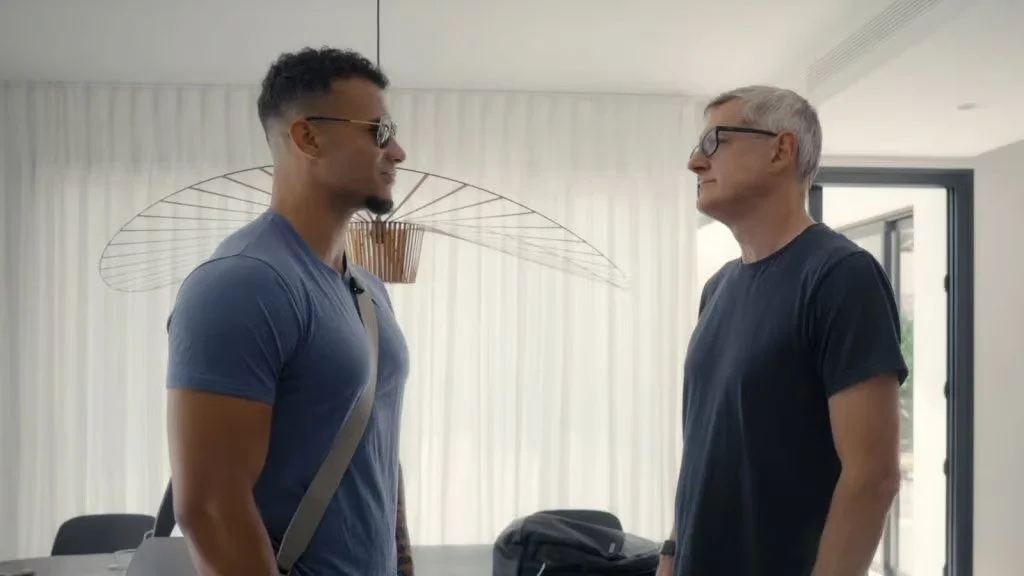
HS & Louis Theroux promotional still from Inside the Manosphere Netflix Documentary | Image Credit: Netflix
Supporting Young Men in a Changing Cultural Landscape
The broader challenge highlighted by documentaries like Inside the Manosphere is that many young men are searching for guidance about identity, purpose and relationships.
When those questions are not addressed in healthy ways, louder online voices often step in to fill the gap.
Encouraging open conversations about masculinity, ambition and emotional wellbeing can help create more balanced perspectives. Young men benefit from seeing that confidence and emotional openness are not opposites, and that strength can coexist with empathy and self-reflection.
For some individuals, professional psychological support can also provide valuable space to explore these questions.
At Regal Private Therapy Practice in London, clinicians work with adolescents and adults navigating challenges related to identity, relationships, confidence and emotional wellbeing. In a confidential and non-judgemental setting, therapy can help individuals reflect on the influences shaping their beliefs and develop healthier perspectives on themselves and others.
Moving Forward with Support
Louis Theroux’s Inside the Manosphere shines a spotlight on a digital subculture that has been growing quietly for years.
While controversial influencers often dominate headlines, the deeper story lies in understanding the psychological and social environment that allows these voices to resonate with some audiences.
Adolescent brain development, social media algorithms, loneliness and changing cultural expectations all play a role.
Addressing these challenges requires more than outrage or dismissal. It requires thoughtful conversations about identity, belonging and the ways young people make sense of the world around them.
For families concerned about the influence of online narratives on a son, brother or loved one, seeking guidance from experienced mental health professionals can provide clarity and support in navigating these complex issues.
Contact our team today if you need support
