

Emotionally Based School Avoidance (EBSA): Signs, Causes and Treatment
By Dr Bradley Powell, Clinical Psychologist | Regal Private Therapy PracticeIf your child is struggling to get to school in the mornings and nobody can quite work out why, you are not alone, and it is not your fault. What you may be seeing is not defiance, not laziness, and not a choice. It may be something that clinicians now call emotionally based school avoidance, or EBSA.
The term has become increasingly recognised in recent years as professionals and parents have come to understand that many children who do not attend school are not refusing to go. They are genuinely unable to, because the anxiety, distress, or overwhelm they experience in relation to school has become too much to manage.
This article explains what EBSA is, what it looks like in children and teenagers, why it is particularly prevalent in London's private and independent school settings, and what effective clinical treatment looks like.
What is EBSA?
Emotionally based school avoidance is a pattern in which a child or young person is unable to attend school regularly due to significant emotional distress. It sits within the broader category of school attendance difficulties, but it is distinct in one important way: the avoidance is driven by genuine psychological distress, not a deliberate choice to miss school.
The shift from the older term 'school refusal' to EBSA reflects a meaningful change in clinical thinking. 'Refusal' implies a wilful decision. EBSA recognises that the child is often desperately distressed, frequently wants to attend school, and is being prevented from doing so by feelings they cannot control.
EBSA is not a behaviour problem. It is an emotional one. The child is not refusing school. They are unable to face it.
EBSA is not a diagnosis in itself. It is a pattern of behaviour that reflects underlying difficulties, most commonly anxiety. Understanding what is driving the avoidance in a particular child is central to working out how to help them.
How common is EBSA?
School attendance has been a significant concern across the UK since the pandemic, and EBSA has emerged as a major contributing factor. According to Department for Education figures published in 2026, 18.14 per cent of pupils in England were persistently absent during the 2024/25 academic year, missing 10 per cent or more of school sessions. This is a meaningful improvement on the previous year, but remains substantially above the pre-pandemic rate of 10.86 per cent recorded in 2018/19.
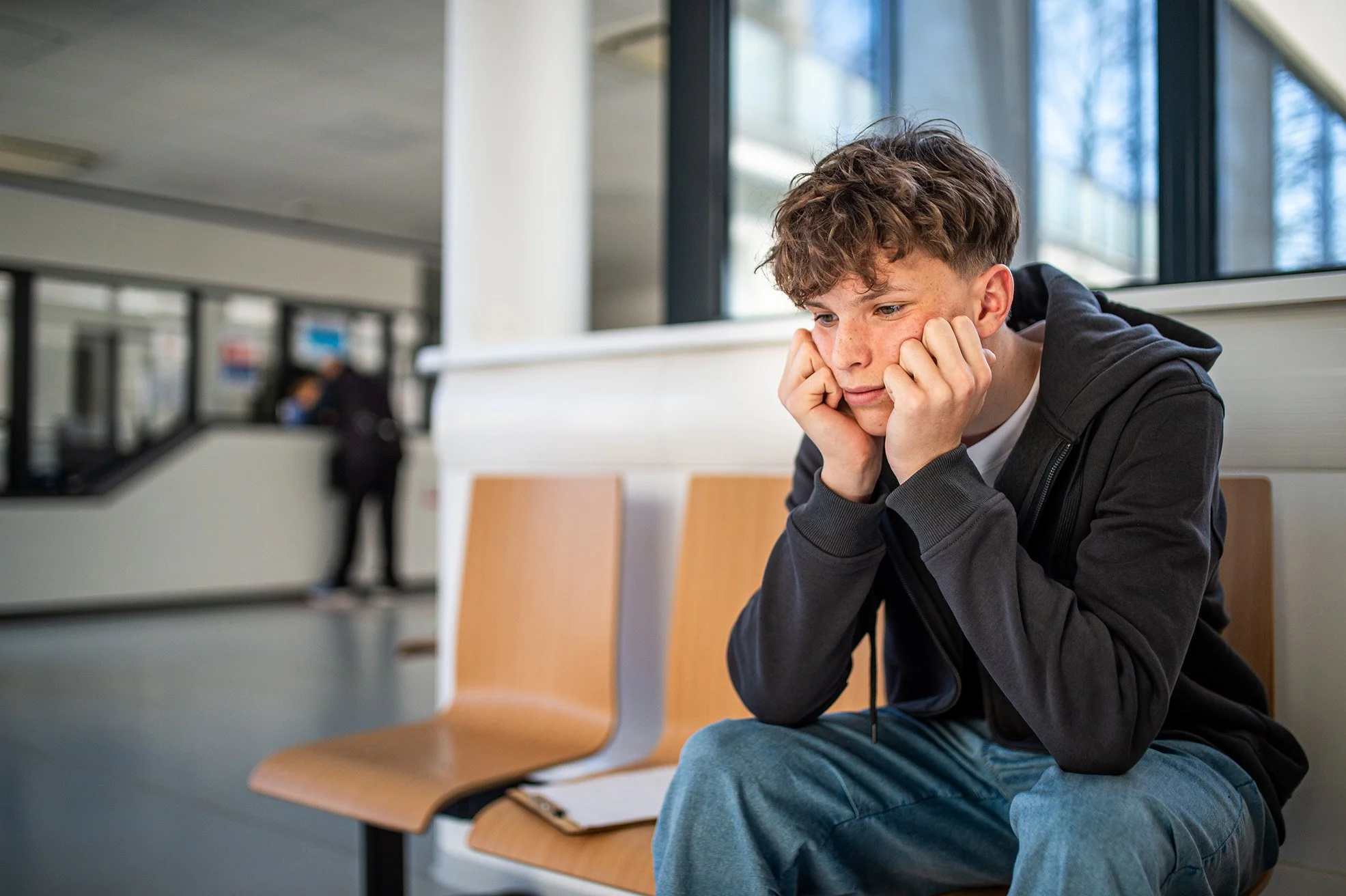
More strikingly, severe absence, defined as missing at least half of all sessions, has continued to rise even as overall absence has started to fall. In 2024/25, 2.39 per cent of pupils were severely absent, up from 2.30 per cent the previous year, and nearly three times the pre-pandemic rate of 0.85 per cent in 2018/19.
These are the children for whom something has gone seriously wrong, and EBSA is widely recognised by educational psychologists as a major contributing factor in this group.
While not all absences are EBSA-related, clinicians and schools report a substantial rise in children whose non-attendance is driven by emotional and psychological distress. A 2024 survey by the mental health charity stem4 found that three in ten young people in the UK had avoided school, college, or university due to their mental health.
The picture in London is not straightforwardly better just because overall absence rates are slightly lower here than the national average.
In several London boroughs, absence is actually rising. And for the families seeking private clinical support, the relevant concern is not the regional average: it is their child, who is not going to school.
What does EBSA look like?
EBSA can look different in different children, and it can develop gradually or appear to come on quite suddenly following a particular event or transition. Common signs include:
Physical symptoms on school days: stomach aches, headaches, nausea, and feelings of panic are among the most common presentations. These are not invented. They are genuine physiological responses to anxiety.
Distress before or during the school run: tearfulness, anger, freezing, or refusing to get dressed or leave the house.
Attendance beginning to slip: frequent requests to go home, difficulty staying in lessons, avoidance of specific spaces such as the canteen or playground.
Dread and rumination the evening before school: children who cannot sleep on Sunday nights, or who begin to show signs of distress by the weekend, are often managing significant anticipatory anxiety.
Rapid deterioration following a transition or difficult event: a change of year group, a move to secondary school, a falling out with a friend, bereavement, or a period of illness can all act as a trigger.
Older teenagers may appear to be managing while actually withdrawing. They may attend physically but disengage emotionally, or develop patterns of partial attendance that escalate into full non-attendance. In high-achieving pupils, this can be masked by continued academic performance for some time.
Why is EBSA more common than people think in independent schools?
There is sometimes an assumption that EBSA is a difficulty primarily associated with disadvantaged or disrupted backgrounds. This is not the case. EBSA affects children across all social and educational contexts, and there are specific features of independent school life that can make it particularly likely to develop.
Academic pressure and perfectionism: Children in selective or high-performing schools are often acutely aware of academic expectations. When a child's sense of self-worth becomes closely tied to their results, attending school can begin to feel like a high-stakes performance with little room for error. The fear of getting something wrong, being seen to struggle, or falling behind peers can become genuinely paralysing.
Clinical psychologists working with this group frequently see perfectionism as a key driver of school-related anxiety. The child who achieves highly, but at enormous personal cost, is not always the child anyone thinks to worry about.
Social intensity: The social dynamics of independent school life, particularly in boarding and day schools with tight peer groups, can be intense. Social anxiety, difficulties with friendships, or the aftermath of a falling out can make school feel like an environment with nowhere safe to retreat to.
Transition points: The move from prep to senior school is a particularly high-risk period. Transitions involve a change of environment, peer group, routine, and expectation, all at once. For an anxious child, this combination can be overwhelming.
Delayed identification: Academically able pupils are sometimes assumed to be coping because they continue to produce good work. This can lead to a delay in recognising that a child is struggling emotionally, which in turn allows the pattern of avoidance to become more entrenched before support is sought.
What causes EBSA?
EBSA rarely has a single cause. It typically arises from a combination of factors in the child, their family context, and the school environment. Common contributing factors include:

Anxiety disorders: generalised anxiety, social anxiety, separation anxiety, and health anxiety are all frequently associated with EBSA.
ADHD: difficulties with attention and emotional regulation can make the demands of a school day feel overwhelming, particularly in environments with high academic and social expectations.
Autism: sensory sensitivities, difficulties with unpredictability and social demands, and the exhaustion of masking in a mainstream setting can all contribute.
Depression and low mood: a child experiencing persistent low mood may lose the motivation and energy needed to manage school alongside everything it involves.
Trauma or adverse experiences: bereavement, family breakdown, bullying, or other difficult events can significantly affect a child's capacity to engage with school.
Previous negative experiences of school: including academic failure, social rejection, or a specific distressing incident.
Understanding which of these factors is most relevant for a particular child requires proper clinical assessment, which is where specialist psychological input becomes essential.
What Can Parents Do at Home?
When a child is experiencing EBSA, it is natural for parents to feel torn between wanting to reduce their child's distress and wanting to encourage school attendance. This can be an incredibly difficult balance to strike, particularly when mornings become emotionally charged and everyone in the family is affected.

Whilst every situation is different, there are several principles that are consistently helpful. The first is to validate the child's emotions without validating avoidance itself. Statements such as, "I can see that school feels really difficult for you today" acknowledge the child's distress, whilst still communicating that attendance remains the goal.
Maintaining routines wherever possible is also important. Consistent sleep patterns, morning routines, meal times, and expectations provide a sense of predictability and stability, which can help reduce anxiety.
Parents are often tempted to negotiate extensively around attendance, particularly when their child is distressed. Whilst understandable, prolonged discussions and repeated reassurance can sometimes unintentionally reinforce anxiety. Clear, calm, and predictable communication is usually more effective.
Most importantly, progress should be measured in small steps rather than all-or-nothing outcomes. For some children, success may initially involve entering the school grounds, attending a single lesson, or remaining in school for part of the day. Gradual progress often leads to more sustainable outcomes than attempting to achieve a full return immediately.
Working closely with school staff and professionals can also help ensure that everyone is supporting the child in a consistent and coordinated way.
Common Misconceptions About EBSA
Children experiencing EBSA are often misunderstood. Parents may worry that their child is becoming lazy, manipulative, oppositional, or simply unwilling to attend school. In reality, most children with EBSA are experiencing significant emotional distress and would prefer not to feel this way.
Whilst avoidance can become reinforced over time, the underlying driver is usually anxiety, overwhelm, low mood, social difficulties, or another form of psychological distress rather than a deliberate decision not to attend school. Many children desperately want to attend school and maintain friendships but feel unable to cope with the emotional demands that school currently places upon them.
Understanding this distinction is important because it shifts the focus away from punishment or pressure and towards understanding, assessment, and effective support.
How is EBSA treated?
The research is clear that EBSA benefits from early intervention. The longer a pattern of avoidance is allowed to become entrenched, the harder it typically becomes to address. This is why seeking specialist support sooner rather than later matters.
Effective treatment is always individualised. There is no single protocol that works for every child, because EBSA reflects different underlying difficulties in different children. That said, the most effective approaches typically share several common elements.
Comprehensive Psychological Assessment
Before any therapeutic work begins, it is important to understand what is actually driving the avoidance. A clinical psychologist will carry out a comprehensive psychological assessment that explores the child's emotional wellbeing, specific fears and anxieties, social experiences, friendships, family circumstances, school environment, and any previous experiences that may be contributing to their difficulties.
Assessment will also consider whether underlying neurodevelopmental differences such as autism or ADHD may be playing a role. For some children, sensory sensitivities, social exhaustion, difficulties with attention, emotional regulation challenges, or the demands of masking throughout the school day can significantly contribute to school-related distress.
Academically able children, particularly autistic girls and young people who mask their difficulties effectively, can sometimes appear to be coping well despite experiencing considerable emotional strain behind the scenes. Understanding these factors is often essential in developing an effective treatment plan.
The aim of assessment is not simply to understand why attendance has reduced, but to develop a detailed formulation of the factors maintaining the difficulty so that intervention can be tailored to the individual child.
Cognitive Behavioural Therapy (CBT)
CBT is the most extensively evidenced psychological treatment for the anxiety that underlies most cases of EBSA. It helps children and young people to understand the relationship between their thoughts, feelings, and behaviours, and to develop more helpful ways of responding to the situations they find difficult.
In practice, this involves identifying the specific thoughts that are maintaining the child's avoidance, challenging those thoughts, and building a graduated programme of re-exposure to the school environment. This is done collaboratively, at the child's pace, with considerable attention to not overwhelming them. The goal is not simply to get the child back into school as quickly as possible, but to address the underlying anxiety so that a sustainable return becomes possible.
Acceptance and Commitment Therapy (ACT)
For some children, particularly teenagers, ACT can be a valuable complementary approach. Rather than focusing primarily on reducing anxious thoughts, ACT helps the young person to develop a different relationship with those thoughts, building the psychological flexibility to act in line with their values even when anxiety is present. This can be particularly helpful for older adolescents who have tried other approaches or who have developed strong patterns of avoidance.
Work with parents and the family
EBSA affects the whole family, and parents almost always benefit from support alongside the work with their child. Clinical psychologists can help parents to understand what is maintaining the avoidance, to respond to their child's distress in ways that support recovery rather than inadvertently reinforcing avoidance, and to manage the considerable anxiety that this situation generates for families.
Collaboration with school
Effective EBSA treatment rarely happens in isolation from the school. With the family's consent, a clinical psychologist can work directly with pastoral staff, SENCOs, and DSLs to develop a reintegration plan, advise on reasonable adjustments, and ensure that the return to school is managed in a way that supports the child rather than escalating their anxiety.
A phased, gradual return to school, developed collaboratively between the child, family, clinician, and school, is typically far more effective than a rapid or enforced return.
Recovery and Long-Term Outcomes
The good news is that most children experiencing EBSA can make significant progress when the underlying causes are identified and treated appropriately. Recovery is often gradual rather than immediate, particularly when attendance difficulties have been present for some time, but positive outcomes are common when support is provided early.
With the right combination of psychological intervention, parental support, and school collaboration, many young people successfully rebuild confidence, improve attendance, and re-engage with education. The goal is not simply to get a child back through the school gates, but to help them feel safe, confident, and able to participate fully in school life once again.

What about the waiting list?
In many parts of London, CAMHS waiting times for specialist assessment and treatment can extend for several months, meaning some families seek private support while awaiting NHS input.
Private clinical psychology can offer assessment and treatment within weeks rather than months, with appointments that fit around the school term and that can be delivered in person at our Marylebone clinic or, where appropriate, in school.
Getting help for your child
If you are concerned that your child may be experiencing EBSA, the most important first step is to seek a proper clinical assessment rather than waiting to see whether things improve on their own. The earlier the intervention, the better the outcomes.
Regal Private Therapy Practice offers specialist clinical psychology support for children and young people experiencing EBSA and school-related anxiety. Our HCPC-registered doctoral clinical psychologists work with children, families, and schools, with appointments available within two weeks. To find out more or to arrange an initial consultation, contact us today.
References:
Department for Education. (2026, March 26). Pupil absence in schools in England: 2024/25 [Accredited official statistics]. Explore Education Statistics. https://explore-education-statistics.service.gov.uk/find-statistics/pupil-absence-in-schools-in-england/2024-25
stem4. (2024, February 3). Children and young people more worried than ever about going to school [Press release]. https://stem4.org.uk/children-and-young-people-more-worried-than-ever-about-going-to-school-feb-24-press-release/
