

Men and Anxiety: Why It Looks Different - and Why That Matters
By Dr Bradley Powell, Clinical Psychologist | Regal Private Therapy PracticeAnxiety is one of the most common mental health challenges in the UK. According to the Adult Psychiatric Morbidity Survey, 1 in 5 people in England are living with a common mental health problem like anxiety in any given week (Liubertiene et al., 2025). Yet when we picture what anxiety looks like, we tend to picture the same thing: someone visibly distressed, tearful, withdrawn. For many men, that picture doesn't fit their experience at all — and that disconnect is one of the reasons male anxiety so often goes unrecognised, untreated, and misunderstood.
In this article, I want to talk honestly about how anxiety presents in men, why it's so frequently missed, and what effective support actually looks like.

The Numbers Tell Only Part of the Story
According to ONS Personal Wellbeing Survey data from 2022/23, around 29.9% of men in the UK reported high levels of anxiety, up significantly from 18.3% a decade earlier (ONS, 2023). That upward trend matters. But the figure almost certainly understates the true picture.
Anxiety in men is notoriously underdiagnosed. The reasons are partly cultural; many men have grown up in environments where emotional difficulty is equated with weakness, where the expectation is to push through, stay in control, and get on with it. The result is that anxiety doesn't always surface as anxiety. It shows up as something else entirely.
Anxiety Doesn't Always Look Like Anxiety
Anxiety in men can take many different forms, and it does not always look like obvious worry or distress. Some men may come across as nonchalant, as though they do not care about much. Others may appear loud, socially confident, or always in control. Some may become absorbed in work, the gym, achievement, or being seen as reliable and capable.
But behind the scenes, there may be something else going on. The man who seems quiet or detached may not be cold or uninterested; he may be worried about saying the wrong thing. The man who is exceptionally high-performing may be driven by anxiety around achievement, pleasing others, or avoiding mistakes. The person who is overly loud or constantly entertaining others may be anxious that people will not find him interesting unless he performs in that way.
It might also be the person who is really nice to talk to, always there to help others, but never shares anything personal about themselves. They may be warm, supportive, and reliable, while keeping their own inner world completely hidden. Equally, some people who seem "too cool for school", emotionally distant, or slightly different may not simply have a detached personality style. Sometimes, that distance is a form of anxiety — a way of protecting themselves from judgement, rejection, or vulnerability.
This is why anxiety in men is so often missed. It can look like confidence, discipline, emotional distance, irritability, overworking, people-pleasing, or simply being "the reliable one". In some cases, what appears to be coldness is actually anxiety inhibiting emotional expression.
How Anxiety Actually Presents in Men
When I work with men experiencing anxiety, I rarely see the textbook presentation in the first session. What I'm far more likely to see is:
Irritability and short temper. Anxiety activates the nervous system's threat response. For many men, that threat response doesn't look like fear — it looks like anger. Snapping at a partner, losing patience over small things, or having a low-grade irritability that never quite lifts.
Overworking and hyperproductivity. Staying constantly busy is one of the most effective ways to avoid anxious thoughts. Men often describe throwing themselves into work, filling every available hour, and feeling inexplicably worse when things slow down.
Difficulty sleeping. Racing thoughts, difficulty switching off, waking in the early hours: sleep disruption is one of the most consistent signs of anxiety that men report, often without connecting it to their mental health.
Increased alcohol use. Self-medication with alcohol is disproportionately common among men with anxiety. Alcohol temporarily reduces the activity of the nervous system and blunts the threat response. But the rebound effect the following day reliably makes anxiety worse, creating a cycle that can be difficult to break. Not only that, alcohol misuse is associated with a significantly increased risk of death by suicide (Isaacs et al., 2022).
Physical symptoms. Chest tightness, tension headaches, a persistent knot in the stomach, and muscle aches. Anxiety is as much a physical experience as a psychological one, and men often present to their GP with somatic complaints that are rooted in unrecognised anxiety.
Withdrawal. Cancelling plans, avoiding social situations, and keeping conversations surface-level. Anxiety can drive isolation while the person doing the withdrawing appears, from the outside, to be fine.
None of these presentations are unique to men. But together, they form a recognisable pattern that is easy to overlook, particularly when the person experiencing them doesn't identify with the word "anxiety" at all.

By the time someone comes into the therapy room, anxiety may not be the only thing they are struggling with. What may have started as anxiety can develop into panic attacks, unexplained physical symptoms, significant low mood, alcohol misuse, burnout, or withdrawal from ordinary life. This can include pulling away from friendships, avoiding work demands, cancelling social plans, or disengaging from relationships and responsibilities.
This is why recognising anxiety early matters. Anxiety can gradually lead to avoidance, reduced enjoyment, disconnection, panic, depression, and patterns of coping that become harmful over time. The earlier men are able to understand what is happening and access the right support, the more likely they are to prevent it becoming something more entrenched and damaging.
Why Men Often Don't Seek Help
Research consistently shows that men are significantly less likely than women to seek professional support for their mental health. A survey of 1,000 UK men commissioned by the Priory Group found that 40% had never spoken to anyone about their mental health - not a therapist, not a friend, not a partner (Priory Group, n.d.).
Several factors contribute to this. Stigma is part of it. Where anxiety carries stigma, it can also carry a greater amount of shame, which in turn stops people from seeking help. So is the way anxiety is framed in public discourse: language that often doesn't resonate with how men describe their own experience. There can also be a sense, reinforced by messages in the media or by older, parental expectations, that men should simply get on with it on their own. And there's the practical reality that asking for help requires admitting you need it, which for many men carries a significant psychological cost.
But perhaps the most underappreciated barrier is simply that many men don't recognise what they're experiencing as anxiety. If no one has ever explained that anxiety can look like rage, or restlessness, or a relentless drive to be useful, then there is no framework for joining those dots.
What Effective Treatment Looks Like
Anxiety is one of the most treatable mental health conditions, and the evidence base for psychological treatment is strong. Cognitive Behavioural Therapy (CBT) is the most extensively researched and evidence-based psychotherapy for anxiety disorders, and clinical guidelines from the National Institute for Health and Care Excellence recommend it as a first-line treatment (NICE, 2011). It works by exploring the relationship between thoughts, feelings, and behaviours, helping you identify the patterns that are maintaining your anxiety and building practical tools to change them.
Of course, walking into a therapy room can itself feel anxiety-provoking, and that's one of the very things that can stop people coming in the first place. But the effectiveness of CBT, when people do take that step, is truly life-changing for many.
CBT informs the coaching style that I take with clients, helping people reach their goals and come to their own conclusions as they lead their own way through treatment, rather than being told what to do. Many men find this well-suited to the way they prefer to engage: it's focused, skills-based, and goal-oriented.
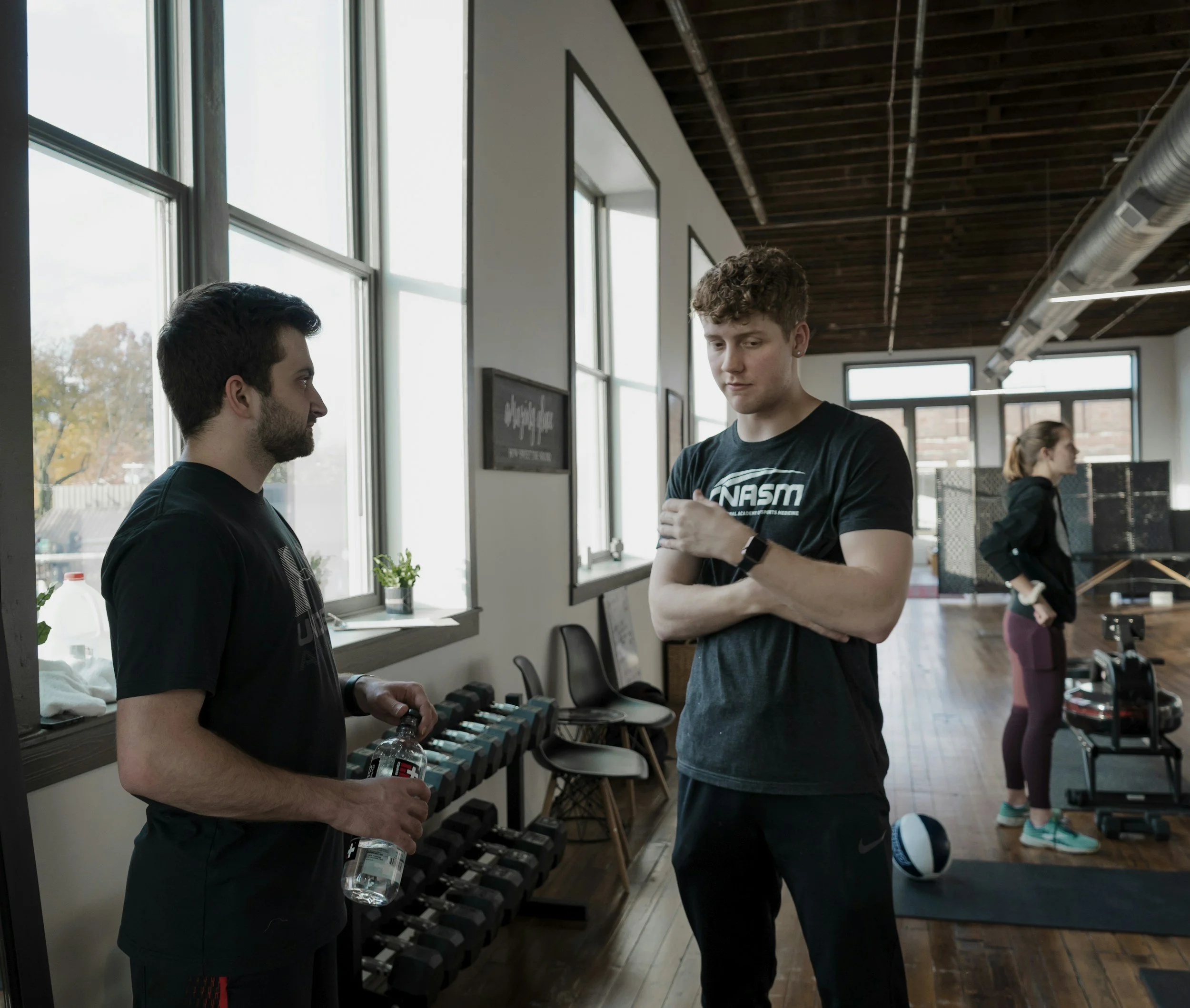
It can help to think of it the same way you might think about going to the gym and working with a personal trainer, or using crutches to support a broken leg. Seeking expert psychological support works in much the same way.
It's a structured, practical form of support, not just for managing distress, but for performing at your best. This is part of the reason many leading entrepreneurs and senior figures in finance now have a psychologist as part of their inner circle: several of the world's largest hedge funds and trading firms employ in-house psychologists and performance coaches to support decision-making, resilience, and performance under pressure (Seeking Alpha, 2025).
The relationship matters too. Many men who come to see me have never spoken to anyone about what they're going through, and the first session can feel exposing. That's completely understandable. Part of my role is to create the kind of environment where it feels possible to be honest, not because it's comfortable, but because that honesty is the starting point for real change.
High-Functioning Anxiety: The Men Who Are "Fine"
One group worth addressing specifically is men experiencing what clinicians sometimes describe as high-functioning anxiety. These are individuals who, by most external measures, appear to be doing well. They're successful at work, reliable in their relationships, meeting their responsibilities. And they're quietly exhausted.
High-functioning anxiety is particularly common among men in demanding professional roles. The same traits that drive performance, for example, perfectionism, vigilance, and the drive to anticipate problems, are the traits that anxiety hijacks. The result is someone who functions effectively in the world while living with chronic internal distress that never quite lets up.
For these men, the idea of seeking support can feel unnecessary, or even self-indulgent. What I'd offer is this: functioning is not the same as being well. You don't need to be in crisis to deserve support. And addressing anxiety while you're still coping tends to produce much better outcomes than waiting until you're not.
Taking the First Step
If any of this resonates, the most important thing to know is that anxiety, however long you've been living with it, and however it's been showing up, is highly treatable. The patterns that maintain it can be understood, and they can be changed.
Regal Private Therapy Practice offers confidential assessments and evidence-based support for men experiencing anxiety, with appointments available in Marylebone, London. Initial assessments are typically completed within a week of referral.
If you'd like to find out more or book a consultation, please contact the practice on 020 3835 6419 or at info@regalprivatetherapypractice.co.uk.
Dr Bradley Powell is a HCPC-registered Clinical Psychologist and co-founder of Regal Private Therapy Practice. He specialises in evidence-based psychological therapy for anxiety, depression, and complex presentations in adults.
References
Isaacs, J. Y., Smith, M. M., Sherry, S. B., Seno, M., Moore, M. L., & Stewart, S. H. (2022). Alcohol use and death by suicide: A meta-analysis of 33 studies. Suicide and Life-Threatening Behavior, 52, 600–614. https://doi.org/10.1111/sltb.12846
Liubertiene, G., Sloman, A., Morris, S., Bhavsar, V., Clark, C., Das-Munshi, J., Jenkins, R., McManus, S., Oram, S., & Wessely, S. (2025). Common mental health conditions. In S. Morris, S. Hill, T. Brugha, & S. McManus (Eds.), Adult Psychiatric Morbidity Survey: Survey of mental health and wellbeing, England, 2023/4. NHS England.
National Institute for Health and Care Excellence. (2011). Generalised anxiety disorder and panic disorder in adults: Management (CG113). NICE.
Office for National Statistics. (2023). Public opinions and social trends, Great Britain: Personal well-being and loneliness. https://www.ons.gov.uk/peoplepopulationandcommunity/wellbeing/datasets/publicopinionsandsocialtrendsgreatbritainpersonalwellbeingandloneliness
Priory Group. (n.d.). Men's mental health: Why 40% of men won't talk about it. https://www.priorygroup.com/blog/40-of-men-wont-talk-to-anyone-about-their-mental-health
Seeking Alpha. (2025, November 17). Why hedge funds hire psychologists to keep traders from burning out. https://seekingalpha.com/news/4522711-why-hedge-funds-hire-psychologists-to-keep-traders-from-burning-out
