


Social Anxiety Disorder | Symptoms, Causes and Evidence-Based Treatment
Social anxiety, clinically known as social anxiety disorder or social phobia, is a long-term and overwhelming fear of social situations. It is more than shyness: the fear does not fade with familiarity, and it affects everyday activities, confidence, relationships and work or school life. It usually begins in the teenage years, and UK national guidance recommends treatments that can help.



Featured in

What is social anxiety?
Most people feel nervous before a presentation or an unfamiliar social event. Social anxiety disorder is different. The worry arrives well before the situation, sits with you throughout it, and often stays for hours or days afterwards while you replay what you said and how you think you came across.
It is one of the most persistent anxiety disorders, and it starts early. NICE puts the median age of onset at 13.
It is also one of the least well measured. There is no UK survey that reports how many adults have social anxiety disorder specifically. The figure quoted most often, a lifetime prevalence of around 12%, comes from a large US study that NICE cites in its guidance. What is clear is that it is one of the most common anxiety disorders, and that it is significantly under-recognised in primary care.
Perhaps the most striking figure is this one: NICE notes that only around half of people with social anxiety disorder ever seek treatment, and those who do typically wait 15 to 20 years after their symptoms begin. If you have been living with this quietly for years, you are in very ordinary company.
Social anxiety symptoms

Social anxiety disorder symptoms in adults
You may have social anxiety disorder if you:
worry about everyday activities such as meeting new people, starting conversations, speaking on the phone, working or shopping
avoid or worry a great deal about social activities like group conversations, eating with company, or parties
consistently worry about doing something you think is embarrassing, such as blushing, sweating or appearing incompetent
find it difficult to do things while others are watching, and feel you are being observed and judged
fear being criticised, avoid eye contact, or have low self-esteem
experience physical symptoms such as feeling sick, sweating, trembling or a pounding heartbeat
have panic attacks, where an overwhelming sense of fear and anxiety comes on, usually for a few minutes
Many people with social anxiety disorder also experience depression, generalised anxiety disorder or panic disorder alongside it. Read how anxiety presents differently in men.
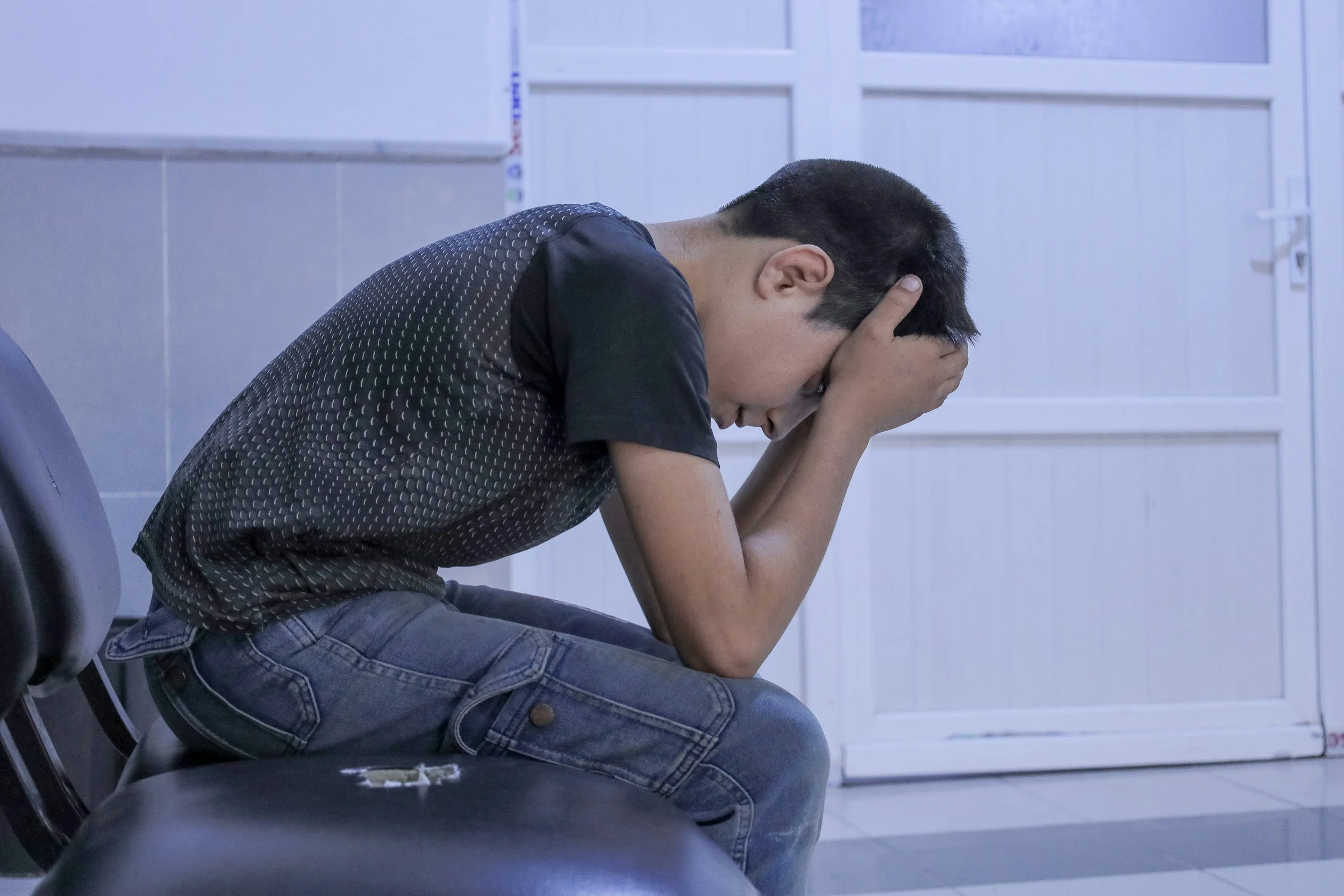
Social anxiety in children and teenagers
Social anxiety often looks different in a younger child, and can be mistaken for shyness or for being difficult. Signs include:
crying or getting upset more often than usual
getting angry a lot
avoiding interaction with other children and adults
fear of going to school, or of classroom activities, performances and social events
not asking for help at school
being very reliant on a parent or carer
In teenagers, the pattern usually looks closer to the adult one, with avoidance of group activities, reluctance to speak in class, and a great deal of anticipation and replaying afterwards.
You do not need to have all of these to have social anxiety disorder, and the situations people find hardest vary widely. Some people are comfortable presenting to a room but dread one-to-one small talk. For others it is the reverse.
What are the causes of social anxiety?
There is no single cause, and no one knows for certain why it develops in one person and not another.
NHS clinical guidance points to a combination of factors. Some people appear to be temperamentally more anxious from an early age. Others have had experiences that shaped how they expect to be seen, such as bullying, harsh criticism in childhood, or experiences of discrimination. Social anxiety sometimes runs in families. It is often bound up with low self-esteem that began in childhood or adolescence.
Where children and young people are concerned, NICE guidance directs clinicians to look at the wider picture too, including peer victimisation at school and patterns at home that may unintentionally reinforce avoidance rather than support a child to face difficult situations gradually.
What is much better understood is what keeps social anxiety going. Avoidance provides short-term relief and long-term reinforcement. Safety behaviours, like gripping a glass to hide shaking hands or rehearsing sentences in advance, prevent you from discovering that the feared outcome does not happen. Attention turns inward, onto how you imagine you appear, and away from what is actually going on in the room. This is precisely what evidence-based treatment targets.
How is social anxiety diagnosed?
In the UK, social anxiety disorder is diagnosed by a suitably qualified mental health professional, such as a Clinical Psychologist or psychiatrist, following a full assessment.
NICE recommends brief screening first, using either the three-item Mini-Social Phobia Inventory or two simple questions about whether you avoid social situations and whether you feel fearful or embarrassed in them. A fuller assessment then looks at which situations you fear and avoid, what you are afraid might happen, how you see yourself, what safety behaviours you use, and where your attention goes in social situations. Validated measures such as the Social Phobia Inventory (SPIN) or the Liebowitz Social Anxiety Scale (LSAS) may be used to track change over time.
A good assessment also checks for conditions that commonly sit alongside social anxiety, including depression, other anxiety disorders, alcohol or substance use, and autism.
Assessment privately follows the same clinical standards, usually with a shorter wait.
If you are unsure and would like to speak to one of our specialists, please don’t hesitate to reach out to our team today.
Social anxiety treatment: what are the recommended options?
-
People often ask how to overcome social anxiety on their own. Self-help has a real place, and the NHS suggests keeping a note of your thoughts in social situations, breaking difficult situations into smaller steps, and turning your attention outwards onto what people are actually saying. For social anxiety that has persisted, though, structured treatment is what the evidence supports.
Treatment for social anxiety disorder in the UK is governed by NICE guideline CG159, Social anxiety disorder: recognition, assessment and treatment, published in 2013 and last reviewed in 2024.
At Regal Private Therapy Practice, our award-winning team of Clinical Psychologists follows NICE-recommended guidelines to ensure each individual receives the best evidence-based mental health support.
-
NICE recommends individual cognitive behavioural therapy, specifically developed for social anxiety disorder, as the first-line treatment for adults. Two models are named:
The Clark and Wells model. Up to 14 sessions of 90 minutes over around four months. It includes education about social anxiety, exercises demonstrating the effects of self-focused attention and safety behaviours, video feedback to correct distorted self-image, training in externally focused attention, behavioural experiments with linked homework, work on difficult social memories, and relapse prevention.
The Heimberg model. 15 sessions of 60 minutes plus one 90-minute exposure session, over around four months, covering education, cognitive restructuring, graded exposure to feared situations in and out of session, work on core beliefs, and relapse prevention.
NICE is specific that group CBT should not routinely be offered in preference to individual CBT.
If you would rather not have CBT, another option is CBT-based supported self-help, typically up to nine sessions over three to four months with around three hours of practitioner support.
If you prefer medication, NICE recommends an SSRI, prescribed by a GP or psychiatrist, and can be combined with CBT where the response to either alone has been partial.
Other routes you could consider include short-term psychodynamic psychotherapy developed specifically for social anxiety, although NICE is explicit that its clinical effectiveness is more limited than CBT.
-
NICE recommends individual or group CBT focused on social anxiety, typically 8 to 12 sessions. Individual sessions usually run 45 minutes, group sessions 90 minutes with children of a similar age. Treatment covers education, graded exposure to feared situations, social skills and opportunities to practise them.
Parents and carers are often involved, particularly with younger children, so that exposure and skills practice continue between sessions.
NICE advises that medication should not routinely be offered to children and young people with social anxiety disorder. Young people from around 15, where they have the emotional and cognitive capacity, may be offered a treatment developed for adults.
-
This is worth knowing, because several widely marketed options are not supported by the guidance:
Mindfulness-based interventions, including mindfulness-based cognitive therapy and mindfulness-based stress reduction, are not recommended for social anxiety disorder. NICE reviewed further evidence in 2017 and kept the recommendation unchanged.
Supportive therapy is not recommended.
St John's wort and other over-the-counter anxiety preparations are not recommended, and may interact with other medications.
Botulinum toxin for excessive sweating and endoscopic thoracic sympathectomy for sweating or blushing are not recommended, as there is no good-quality evidence of benefit and they may cause harm.
Benzodiazepines, antipsychotics, tricyclic antidepressants and anticonvulsants are not routinely recommended for social anxiety disorder in adults.
Support for social anxiety disorder at Regal Private Therapy Practice
Our Clinical Psychologists provide individual CBT for social anxiety disorder, delivered in line with NICE guidance, for adults, children and young people. That means a structured course of work built around understanding what maintains your social anxiety, shifting attention outwards, and testing feared predictions gradually and deliberately rather than being pushed into situations before you are ready.
We know that picking up the phone to a therapy practice is a particularly hard first step when the difficulty itself is fear of being judged. You are welcome to email instead, and we’ll be in touch to help arrange your appointment.
Read more about therapy for adults or therapy for children and adolescents.
If you need urgent support
If you are struggling to cope or worried about your safety, help is available now. Call 111 and select the mental health option, or contact your GP. Samaritans are available 24 hours a day on 116 123. If you are worried about a child or young person, the YoungMinds Parents Helpline offers free advice. In an emergency, call 999 or go to your nearest A&E.
Frequently asked questions about social anxiety disorder
-
No. Shyness tends to ease as a situation becomes familiar. Social anxiety disorder is a persistent fear that does not fade, and it affects everyday activities, self-confidence, relationships and work or school life. People with social anxiety disorder typically worry before, during and after social situations.
-
Sometimes. A number of people who develop social anxiety in adolescence recover before adulthood. NICE notes, however, that once it has persisted into adulthood, the chance of recovery without treatment is modest compared with many other common mental health problems.
-
NICE-recommended CBT for social anxiety disorder in adults runs to around 14 to 16 sessions over approximately four months, depending on the model used. For children and young people, it is typically 8 to 12 sessions. Supported self-help is usually up to nine sessions over three to four months.
-
NICE recommends individual CBT developed specifically for social anxiety disorder as the first-line treatment for adults, based on either the Clark and Wells or Heimberg model. Medication, in the form of an SSRI, is recommended where someone prefers it or where CBT alone has produced only a partial response.
-
It can be. Under the Equality Act 2010, a mental health condition is considered a disability if it has a long-term effect on your normal day-to-day activities, which includes things like interacting with people and working set hours. Long-term means it has lasted, or is likely to last, 12 months. What matters is the effect on you rather than the diagnosis itself.
This is general information, not legal advice. If you are considering workplace adjustments, Acas and Citizens Advice both publish free guidance.
-
NICE does not recommend mindfulness-based interventions for social anxiety disorder, including mindfulness-based cognitive therapy and mindfulness-based stress reduction. NICE examined further evidence during surveillance in 2017 and left the recommendation in place. Mindfulness may still be useful for general wellbeing.

Contact Our Team Today
References
NICE (2013, last reviewed 2024). Social anxiety disorder: recognition, assessment and treatment. Clinical guideline CG159. https://www.nice.org.uk/guidance/cg159
NHS. Social anxiety (social phobia). https://www.nhs.uk/mental-health/conditions/social-anxiety/
National Collaborating Centre for Mental Health (2013). Social Anxiety Disorder: Recognition, Assessment and Treatment. British Psychological Society and Royal College of Psychiatrists.
NICE (2017). Surveillance report: Social anxiety disorder (2013) NICE guideline CG159.
GOV.UK. When a mental health condition becomes a disability. https://www.gov.uk/when-mental-health-condition-becomes-disability